

6 Signs Your Volvo Penta Impeller Needs Replacing
Key Takeaways:
- A failing impeller can lead to engine overheating, poor water flow, and major engine damage.
- Common signs include rising engine temperature, low water pressure, reduced performance, or abnormal sounds.
- Volvo Penta recommends replacing the impeller annually or every 100 hours.
- Timely replacement prevents breakdowns and extends your engine’s life.
Why the Impeller Is So Important
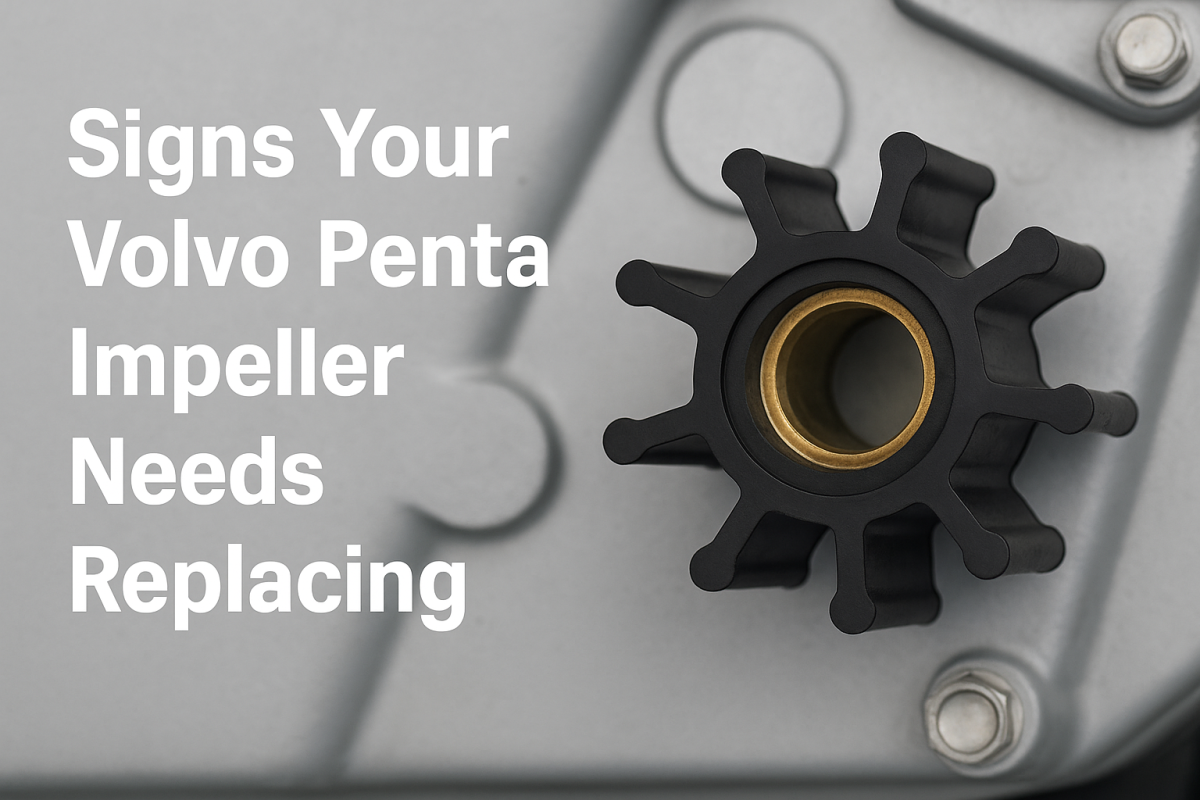
The impeller is a small but essential part of your Volvo Penta marine engine’s cooling system. Typically made of flexible rubber vanes, the impeller draws water from outside the boat and pushes it through the engine to keep it from overheating. Whether your boat is powered by a Volvo Penta inboard, sterndrive, or outboard system, a properly functioning impeller is vital to engine health. Over time, impellers wear out, become brittle, or break apart entirely—especially if the engine has been run dry or the boat sits idle for long periods.
Sign #1: Rising Engine Temperature
One of the clearest indicators of impeller trouble is an unexplained rise in engine temperature. If you notice your temperature gauge creeping up faster than usual or staying higher than normal under moderate loads, your cooling system could be compromised. A worn or damaged impeller fails to push sufficient water through the engine, leading to poor heat dissipation. Ignoring this can result in warped components, head gasket failure, or even a seized engine.
Sign #2: Weak or No Water Flow from the Exhaust
Your engine’s raw water cooling system typically expels water through the exhaust. When functioning properly, you should see a steady stream or “pee stream” of water exiting the back of the boat. If the water flow is reduced, sporadic, or absent altogether, the impeller may be failing or already damaged. This sign is especially obvious on startup—if you see steam instead of water, shut the engine down and inspect the cooling system immediately.
Sign #3: Unusual Noises or Vibration
A failing impeller can sometimes cause unusual noises from the water pump housing. If you hear a grinding, squeaking, or whining sound coming from the lower unit or front of the engine, the impeller may have started to break apart or has become misaligned inside the pump housing. This can also create minor vibrations that feel different from the normal hum of a healthy engine. Acting quickly when you hear these sounds can prevent more serious internal damage.
Sign #4: Reduced Engine Performance
An overheating engine due to poor water flow can trigger automatic safety measures in your Volvo Penta system, such as power reduction or warning alarms. Even without alarms, you may notice reduced throttle response or sluggish performance when trying to get up on plane. These symptoms may not immediately point to the impeller, but ruling it out early could save you hours of diagnostic work and unnecessary part replacements.
Sign #5: Visible Damage Upon Inspection
If you're comfortable with basic maintenance and remove the water pump cover or impeller housing, visual inspection can reveal the impeller’s condition. Look for cracked, bent, or missing vanes. Even if only one vane is compromised, the impeller should be replaced. Also, inspect the inner hub for signs of separation or melting. Pieces of a damaged impeller can travel through the engine's cooling passages, requiring a thorough flush to avoid future clogs and overheating.
Sign #6: It’s Been Over a Year or 100 Engine Hours
Even if your engine is running fine, impellers degrade over time—especially if the boat sits unused. Volvo Penta recommends replacing the impeller annually or every 100 hours, whichever comes first. In boats that operate in sandy or silty water, impellers can wear out even faster due to increased abrasion. If you’re unsure of the last replacement date or recently bought a used boat, it's smart to start fresh with a new impeller.
What Happens If You Ignore a Bad Impeller?
Running a boat with a failing impeller can lead to serious and expensive problems. Inadequate cooling causes the engine to overheat, which can damage the cylinder head, exhaust manifolds, and other key components. Overheated engines are not only more likely to fail—they also have shorter lifespans and reduced resale value. In extreme cases, your engine may seize completely, turning a small maintenance job into a full-blown replacement scenario.
How to Replace a Volvo Penta Impeller
Impeller replacement is a common DIY task for experienced boat owners but should only be done if you’re familiar with the process and have the proper tools. The impeller is typically located inside the raw water pump. Remove the pump cover, extract the old impeller, clean the housing, and install the new part with a small amount of lubricant. Be sure to follow the manufacturer’s instructions and always use genuine Volvo Penta parts. If you’re unsure, a certified Volvo Penta service technician can perform the replacement quickly and ensure the system is leak-free and working properly.
Final Thoughts
The impeller may be small, but it plays a big role in keeping your Volvo Penta engine cool, efficient, and reliable. Watch for signs like rising engine temperature, weak water flow, strange noises, and diminished performance. If you notice any of these symptoms—or if it's been over a year since your last replacement—schedule a service or replace the impeller yourself. Regular maintenance of this crucial component helps avoid unexpected breakdowns and protects your marine investment for seasons to come.