

How to Flush and Protect Your Volvo Penta After Every Saltwater Adventure
Taking your boat out in the ocean is exciting, but saltwater can be extremely damaging to your engine. If you own a Volvo Penta marine engine, flushing it after every saltwater outing is essential. This simple step helps remove salt, sand, and debris that can cause corrosion and reduce engine life.
Why Flushing Your Volvo Penta Engine Matters
Saltwater leaves behind mineral deposits and crystals that corrode internal engine components. Over time, this buildup can clog cooling passages, damage the impeller, and lead to engine overheating. Volvo Penta engines that are not flushed after saltwater use may also experience premature wear on thermostats, sensors, and exhaust systems. Regular flushing protects the integrity of the cooling system and improves long-term reliability.
How Often Should You Flush After Saltwater Use
Every time you operate your boat in saltwater, you should flush the engine as soon as possible afterward. For frequent boaters, flushing becomes part of the post-trip routine. It is especially important for Volvo Penta models with raw water cooling systems. Even if your engine uses a closed-loop cooling system, saltwater still runs through the heat exchanger, making regular flushing necessary.
What You Need to Flush a Volvo Penta Engine
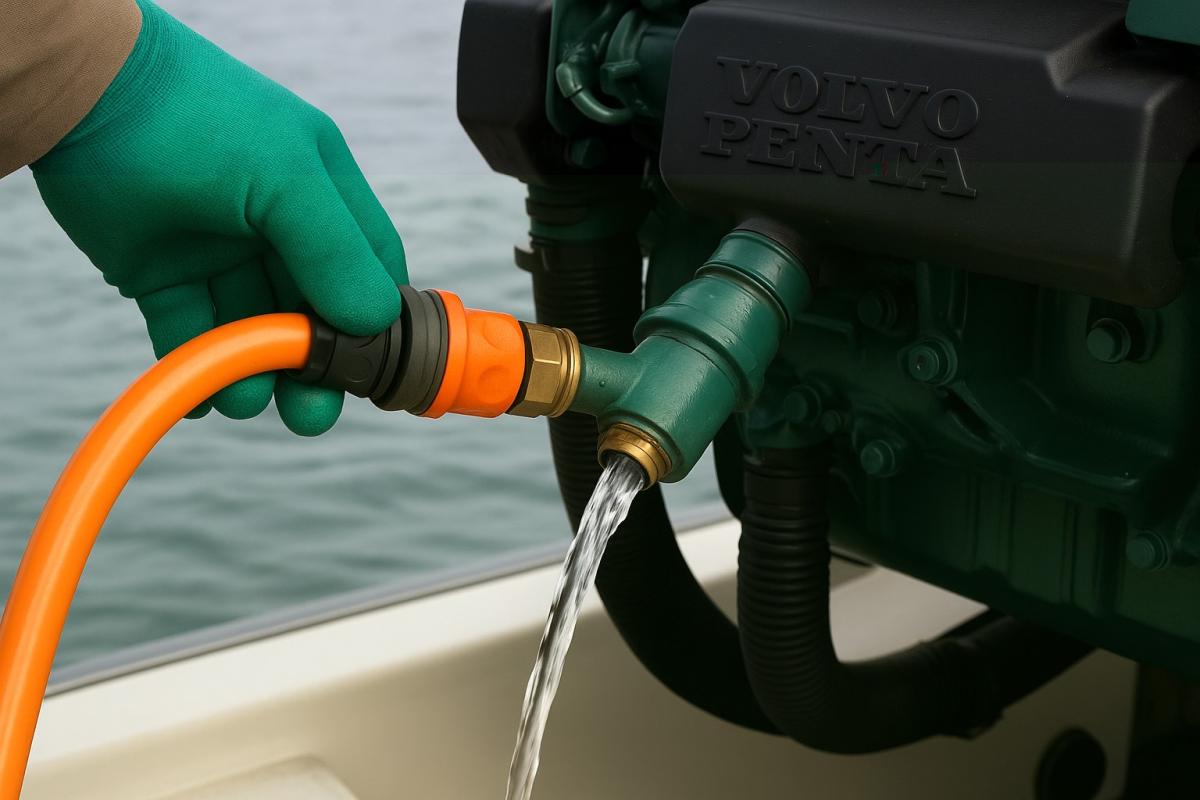
Flushing your engine is straightforward and requires only a few basic items. These include a garden hose, a compatible Volvo Penta flush adapter or earmuffs depending on your drive type, and a source of fresh water. Some models come with a built-in flush port. Others may require attaching earmuffs over the lower unit's water intake. Make sure the engine is off when setting up the flush system and always follow your model’s manual for connection details.
How to Perform a Proper Flush
- Attach the hose securely to the engine’s flush port or earmuffs.
- Turn on the water before starting the engine.
- Start the engine and let it run for 5 to 10 minutes at idle.
- Ensure water is flowing out of the exhaust, indicating circulation.
- Shut off the engine first, then turn off the water supply.
- Let the engine cool before covering or storing.
Extra Tips for Protecting Your Volvo Penta
After flushing, inspect the water pump, look for any leaks, and check your anodes regularly. You may also want to add a salt-neutralizing engine flush solution once a month for deeper protection. Keep a maintenance log to track flushing and service intervals, especially during heavy summer use.