

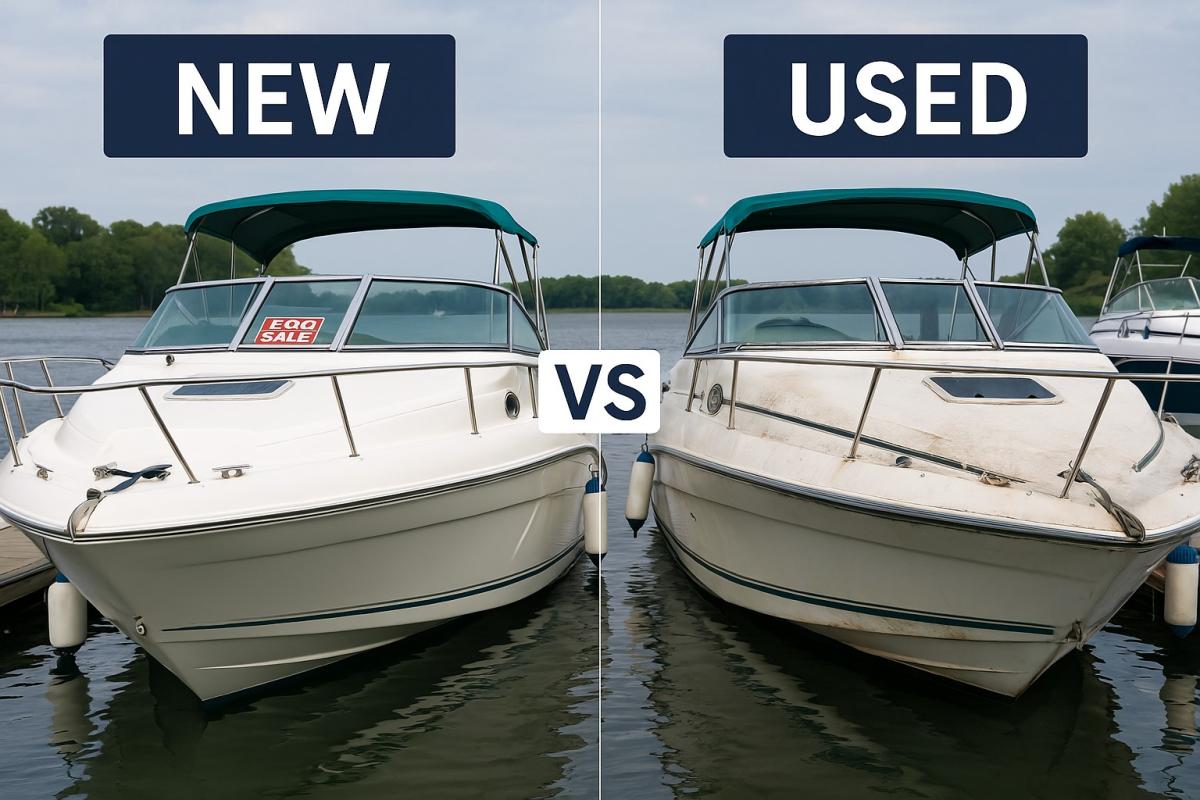
New vs. Used Boats: Which is the Smarter Investment?
Key Takeaways:
- New boats offer peace of mind, warranties, and the latest technology, but they come with higher upfront costs and steep depreciation.
- Used boats are more affordable and hold their value better, but buyers must be diligent about inspections and maintenance history.
- The smarter investment depends on your budget, boating experience, long-term goals, and willingness to handle potential upkeep.
Making the Right Decision: New or Used?
For many prospective boat buyers, one of the biggest decisions is whether to buy new or used. Both options have advantages and drawbacks, and the best choice ultimately depends on your financial situation, lifestyle, and comfort level with risk and maintenance.
Below, we explore the key considerations that can help guide your decision.
The Case for Buying a New Boat
Advantages of New Boats
- Warranty Coverage
Most new boats come with manufacturer warranties that cover the engine, hull, and electronics. This reduces risk and provides peace of mind, especially for first-time boat owners who may be unfamiliar with marine repairs. - Latest Features and Technology
New boats offer the most current design improvements and technologies. From fuel-efficient engines to integrated GPS and smart systems, new models provide a cutting-edge experience. - Custom Configuration
Dealerships often allow you to customize your boat’s layout, colors, seating, and electronics package before delivery—an advantage not typically available when buying used. - Fewer Immediate Repairs
Since everything is brand new, you’re unlikely to run into mechanical issues in the first few years. Maintenance costs are lower and more predictable. - Better Financing Options
Lenders tend to offer lower interest rates and longer terms for new boats, making monthly payments more manageable.
· Disadvantages of New Boats
- High Upfront Cost
New boats cost significantly more than their used counterparts. The same model may be 20 to 30 percent cheaper after just one or two years of use. - Rapid Depreciation
Like cars, boats depreciate quickly. A new boat typically loses 20 to 30 percent of its value in the first year and up to 50 percent within five years. - Longer Lead Times
If ordering a new boat, especially during high-demand seasons, expect potential delays for manufacturing and delivery.
The Case for Buying a Used Boat
Advantages of Used Boats
- Lower Purchase Price
Used boats cost less than new models, allowing buyers to get a higher-end boat or more features for the same budget. - Slower Depreciation
Most of the depreciation has already occurred by the time you purchase a used boat. As a result, the boat will hold its value better over time, especially if maintained properly. - More Negotiating Power
Private sellers are often more flexible on price, and you may be able to negotiate extras like trailers, covers, or electronics into the sale. - Proven Track Record
With a used model, you can read reviews and performance feedback from other owners. You'll know what common issues to look out for and which models are known for reliability.
Disadvantages of Used Boats
- Potential Maintenance Issues
Used boats may come with wear and tear, and unknown mechanical problems can surface. An older boat may require repairs and upgrades shortly after purchase. - No Warranty
Unless it's a certified pre-owned boat from a dealer, used boats rarely include warranty coverage. Buyers are responsible for all repairs and service. - Limited Inventory and Features
You may have to compromise on the layout, style, or engine type, and popular models may be hard to find in the used market. - Financing Can Be More Difficult
Banks typically offer higher interest rates for used boats, and older vessels may not qualify for financing at all.
Key Questions to Ask Yourself
- What’s Your Budget?
If you're working with a limited budget but still want a capable and well-equipped vessel, a used boat may offer the best value. If you’re comfortable spending more for reliability and modern features, a new boat could be a better fit. - How Often Will You Use It?
For occasional, seasonal use, a used boat might make more sense financially. If you’re planning to boat regularly or use it for business, the dependability of a new boat may justify the expense. - How Handy Are You?
If you're comfortable with maintenance, repairs, or upgrades, used boats can be a great opportunity. If not, you may prefer the ease and reliability of something brand new. - Are You Planning to Upgrade Soon?
If this boat is a stepping stone to a larger or more specialized model in the next few years, buying used can minimize your loss when it comes time to resell.
How to Maximize Your Investment
For New Boat Buyers:
- Shop at the end of the boating season (late summer or fall) for better pricing and dealer incentives.
- Consider attending boat shows, where manufacturers and dealers often offer special discounts and financing.
- Don’t hesitate to negotiate for accessories, upgrades, or maintenance packages to add value to your purchase.
For Used Boat Buyers:
- Always request a marine survey and have the boat inspected by a professional before buying.
- Ask for maintenance records, engine hours, and a list of previous owners.
- Take the boat for a test run to identify any mechanical issues or unusual behavior on the water.
Final Thoughts
So, which is the smarter investment: a new boat or a used one? The answer depends on your priorities. If you value modern features, reliability, and convenience—and are prepared to absorb the cost—new is likely your best bet. If you’re looking for greater value and are comfortable managing potential repairs, used may be the more financially savvy choice.
In either case, thorough research, proper inspections, and a clear understanding of ownership costs will help you make a purchase that fits your budget and boating lifestyle.