

Outboard Motors vs. Inboard Motors: Which is Better for Your Boat?
If you're looking to buy a powerboat, one of the biggest decisions you'll need to make is whether to go with an outboard motor or an inboard motor. Both have their pros and cons, so let's take a detailed look at how they compare.
Outboard Motors
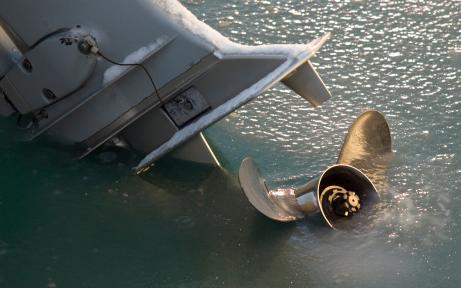
Outboard motors are self-contained propulsion systems mounted on the transom of the boat. The engine and drive unit are combined into a single compact package that provides power to an external propeller.
Pros:
- Portability - Outboards can be easily removed for storage and transport. This allows you to power a small dinghy with a large outboard, then remove it when docked.
- Maneuverability - Their position on the stern allows for excellent maneuverability. Outboards pivot to provide thrust in any direction.
- Shallow water use - The propeller is mounted high, enabling operation in very shallow water. Outboards work great for flats boats.
- Lower cost - In general, outboard motors cost thousands less than comparable inboard engines. The self-contained unit is cheaper to produce and maintain.
- Ease of maintenance - You don't need to cram yourself into an engine compartment to service an outboard. They are easily accessible on the transom.
- Better acceleration - Less weight to get moving provides quicker acceleration.
- Dual engines - It's common to have two or even three outboards on larger boats. This provides redundancy if one fails.
Cons:
- Exposed to elements - Outboards are constantly exposed to water, salt, and weather. This leads to more corrosion and maintenance.
- Less internal space - With the engine mounted externally, you have more usable room inside the boat. But less space for machinery.
- Gas consumption - Outboards tend to be less fuel efficient than comparable inboard engines. Their mechanical drive units cause more power losses.
- Vibration - Since the engine is solidly mounted to the hull, vibration transfer is increased, causing noise.
- Balance - The considerable weight of the motor high on the transom can make the boat stern-heavy.
Inboard Motors
Inboard motors are internal combustion engines mounted inside the hull of the boat. They turn a drive shaft that passes through the hull to turn an external propeller.
Pros:
- Protection - The inboard engine is protected from the elements inside the boat. This improves longevity and reduces corrosion.
- Internal space - With the machinery located internally, more room is available for living space. Storage is increased.
- Fuel efficiency - Inboards tend to be more fuel efficient than comparable outboard motors.
- Smoother operation - With the engine isolated inside the hull, vibration and noise are reduced. The ride is smoother.
- Balance - With the engine weight distributed more evenly, balance is improved.
- Larger engines - Inboards can accommodate much larger, more powerful engines. High-performance boats use inboard power.
- Constant power - Large battery banks can provide a constant supply of electric power when docked or at anchor.
Cons:
- Accessibility - Getting to the engine for maintenance requires crawling into cramped engine compartments. Not fun!
- Higher cost - The extra hardware required makes inboard motors cost much more to produce and maintain.
- Complexity - Inboards have complex drive assemblies passing through the hull, increasing maintenance needs.
- Single engine - If the engine fails, you are dead in the water. Outboards offer redundancy.
- Docking difficulty - Without 360 degree thrust from the prop, docking is more difficult. Bow thrusters help.
- Draft - The shaft and propeller add considerably to the draft of the boat. Not ideal for shallow water.
As you can see, both types of propulsion have their advantages and disadvantages. For many boaters, outboards are the clear option due to lower cost and ease of maintenance. But for larger vessels and performance applications, the smooth power of an inboard can't be beat.
When choosing between outboard and inboard power, consider your budget, intended use, need for redundancy, and maintenance preferences. Weigh all the pros and cons to pick the option that fits your boating style.
FAQs:
- What size outboard motor do I need for my boat?
The size of outboard you need depends on the weight and design of your boat. A good rule of thumb is to choose an outboard with 1 horsepower for every 50 pounds of loaded boat weight for planing hulls, or 1 hp for every 100 lbs of displacement for displacement hulls.
- Are four stroke or two stroke outboards better?
Four stroke outboards are cleaner, more fuel efficient, and quieter. But two strokes provide more power from a lighter motor. Each has advantages, so choose based on your needs.
- How is routine maintenance different?
Outboards require more frequent gear lube changes, anode replacement, water pump service and tuning up. Inboards need oil and filter changes like a car, as well as hoses, belt replacement.
- What about reliability?
When properly maintained, inboard and outboard motors have comparable reliability. Outboards tend to corrode more in saltwater conditions. Inboards have more complex systems that can fail.
- Can I convert my outboard boat to an inboard?
Yes, it is possible to add an inboard motor to a boat designed for an outboard. But it requires major structural modifications, so is rarely cost-effective. It's better to choose the right hull design from the start.
Hopefully this gives you a better understanding of outboard and inboard motor advantages. Let me know if you have any other questions!