

Powering Your Boat: The Pros and Cons of Different Engine Types

Key Takeaways
- Outboard, inboard, and sterndrive are the three main engine types used to power boats. Outboards are portable and easy to access while inboards maximize internal space.
- Two-stroke engines are lightweight and simple but less fuel efficient. Four-stroke engines are more complex but burn cleaner and meet emissions standards.
- Gasoline engines are the most common due to lower cost and weight. Diesel engines are more durable, powerful and fuel efficient but higher priced.
- Engine placement near the stern improves weight distribution. Multiple engines provide redundancy and allow larger boats better maneuverability.
- Regular maintenance and tune-ups are essential for optimizing performance and extending engine life, regardless of engine type.
For most motorized watercraft, the engine is the heart of the boat - providing the essential power to cut through water and transport passengers wherever they desire. Boat engines come in different configurations, strengths, sizes, and fuel types to suit the immense variety of nautical applications. Selecting the ideal engine involves balancing factors like intended use, costs, maintenance, and performance.
The most fundamental decision in choosing a boat engine is whether to go with an outboard, inboard or sterndrive configuration. Outboard engines attach externally to the transom of the boat. They are highly portable and easy to access for maintenance. Inboard engines mount inside the hull of larger boats to maximize internal space. Stern drives combine attributes of inboards and outboards, locating the engine internally while adding an external drive unit.
Two-stroke outboard engines dominated smaller boats for years due to their simplicity, lighter weight, and ability to generate high power from small displacements. However, environmental concerns have driven demand toward four-stroke engines that burn fuel more cleanly and meet emissions standards. Four-strokes are more complex mechanically but in the long run require less maintenance and are more fuel efficient.
For power and reliability, gasoline has long been the standard fuel for boat engines. But diesel has made major inroads in larger vessels and commercial boats due to superior fuel economy, increased torque, and durability. Diesel engines have higher upfront costs but their long lifespan offsets the investment over time.
Mounting the engine toward the stern improves the fore/aft weight balance of boats, making planing easier and safer. Larger craft may utilize two or more engines to provide redundancy if one fails and to improve maneuverability by altering thrust between sides. However twin installations add to system complexity.
Regardless of the engine type selected, proper maintenance is absolutely essential to optimize performance and achieve maximum lifespan. Oil changes, tune-ups, impeller replacement and other basic servicing must be done at regular intervals as specified by the manufacturer. With proper care, boat engines can log thousands of nautical miles over many years of reliable service.
Outboard Engines

The outboard motor is a self-contained propulsion system designed to be affixed to the outside of a boat's transom. Outboards offer the key advantages of portability and easy access for maintenance and repairs. Their external mounting leaves maximum usable space inside the boat. Outboards are commonly used to power small craft like skiffs and inflatables as well as mid-sized boats up to 30 feet.
Portable outboards under 15 horsepower attach to the transom using clamps. This allows easy removal and adaption for use between multiple boats. Larger outboards bolt solidly to the transom to handle greater power and stresses. While fixed in place, bigger motors can still be tilted up when not in use.
Two-stroke outboard models have declined in popularity due to environmental regulations. But four-stroke technology now dominates the market, offering cleaner and more efficient power. Direct fuel injection and electronic engine controls further enhance the capabilities of modern outboards.
Inboard Engines
Inboard engines are located within the hull of the boat. Without a drive unit outside the boat, more room is opened up for passenger seating and storage. Inboards are built for larger vessels generally over 25 feet where their internal mounting provides some advantages in design and performance.
Because the powerplant is fully isolated within the boat's cabin space, inboards operate more quietly and with less vibration. Accessing the engine for maintenance is more difficult but complete removal is simpler compared to outboards or I/O drives. Overall, the streamlined inboard configuration reduces drag and increases top speed potential.
Inboards are typically paired with separate drive systems to deliver power to the water. Standard shafts and propellers are most common. But jet drive and surface drive setups are also found on some inboard boats. Gasoline V8s are popular for performance applications while diesels dominate commercial vessels.
Sterndrive Engines
Also known as I/O or inboard/outboard motors, sterndrive engines combine attributes of inboard and outboard configurations. The powerplant is mounted inboard with just the external drive unit and propeller mounted to the transom. Sterndrives are a popular compromise for mid-sized boats in the 20 to 40 foot range.
With the engine internally mounted, noise and vibration are reduced like a standard inboard. Accessing the motor is also somewhat limited but easier than a full inboard. The stern drive unit tilts vertically to allow access to the boat's swim platform. Fuel efficiency is moderately reduced compared to a full inboard.
Sterndrive maintenance is focused on the external drive portion and involves servicing the u-joints, gimbal housing and bellows boot. Sterndrives employ a vertical shaft path from the gimbal housing so alignment is critical to smooth operation.
Two-Stroke vs. Four-Stroke Engines
Two-stroke outboard engines powered smaller boats almost exclusively until the 1990s. These simple motors offered several advantages - lightweight, compact packaging, high power to weight ratio, and fewer moving parts. However, two-strokes burn oil mixed with gasoline. This makes them less fuel efficient and higher polluting than four-stroke counterparts.
Stricter EPA emissions regulations led to the rise of four-stroke outboards. Four-strokes have separate lubrication systems and burn fuel more efficiently in their combustion cycle. This results in reduced emissions, better fuel economy and lower ongoing maintenance needs.
Modern four-stroke outboards match or exceed the power of two-strokes while running cleaner and quieter. Electronic fuel injection further optimizes efficiency. Two-strokes still exist in smaller motors but the majority of new boats now utilize cleaner four-stroke power.
Gasoline vs. Diesel Engines
For the majority of recreational boating, gasoline burning engines are the most common choice. Gasoline offers a favorable balance of weight, power, and acquisition cost. Refueling and maintenance infrastructure is plentiful for gas engines.
However, diesel engines provide several advantages in workboats, commercial vessels and high-end yachts. Diesels generate bountiful low-rpm torque ideal for displacement hulls and heavy loads. Superior fuel efficiency pays dividends, especially at sustained lower cruising speeds. Maintenance costs are reduced through greater longevity and intervals between overhauls.
Upfront purchase prices for marine diesels are significantly higher. Finding repair facilities can be more difficult. Fuel tanks and lines require special materials to handle diesel. Modern common rail diesel designs continue to close the gap in performance with gas engines while maintaining enhanced efficiency.
Single vs. Multiple Engines
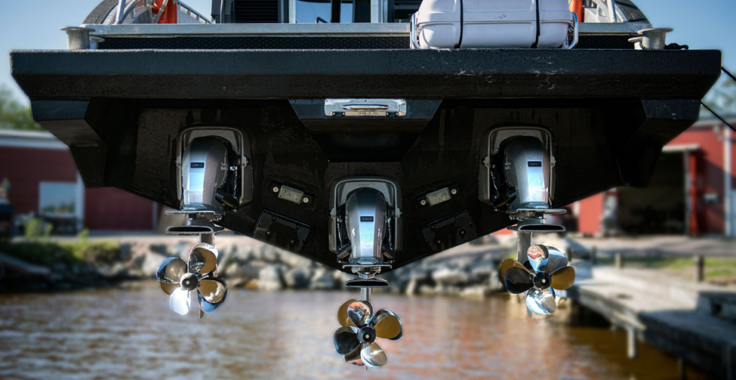
Most recreational boats under 30 feet are powered by a single outboard or stern drive engine. But selecting twin or triple installations opens up more options for larger craft. Multi-engine arrangements improve weight distribution and stability since engines can be spaced widely apart.
Having two or more engines provides a redundancy safety factor. If one engine fails, the other(s) may allow you to limp back to port. Some multi-engine controls even allow alternating engines to maximize runtimes between overhauls. And captains can fine-tune throttle between engines to enhance maneuvering and steering.
But multiple engines add to system complexity and upfront costs. Careful engine and propeller selection along with professional rigging is needed to maximize performance. There is also increased maintenance to stay on top of. For these reasons, many boaters maximize the capabilities of modern powerplants by running a single high-tech engine.
Maintenance Best Practices
All marine engines - outboard, inboard, gasoline, diesel, two-stroke, or four-stroke – require thorough and disciplined maintenance habits to reach optimal longevity and performance. Here are top maintenance tips:
- Follow factory recommendations for all intervals - oil changes, gear lube, winterization, etc.
- Inspect hoses, belts and connections for wear, cracks or leaks. Replace as needed.
- Change engine coolant per the maintenance schedule to prevent corrosion.
- Replace sacrificial anodes before they are 50% corroded to protect outdrives and other components.
- Have a professional dealer perform regular tune-ups to maximize power and economy.
- Watch engine temperature gauges for signs of overheating and have the cooling system serviced if needed.
- Winterize properly based on climate; fog the engine, stabilize the fuel system, charge batteries.
- Address small issues early before they cascade into major repairs down the road.
Choosing the ideal boat engine is an important decision based on many factors - boat style and usage, operating costs, desired performance.