

The Impact of Climate Change on Marine Life: What Boaters Should Know in 2024

Key Takeaways:
- Ocean temperatures have warmed by over 1°F since 1900, causing habitat shifts and disrupting marine food chains (1).
- Ocean acidity has increased 26% since preindustrial times, threatening corals and shellfish (2).
- Mangrove forests that provide vital nursery habitat declined by 20-50% over the past 50 years (3).
- Fish stocks are declining with warming waters, down 4.1% globally from 1930 to 2010 (4).
- Harmful algal blooms (HABs) have increased dramatically since 1982 (5).
- Collisions between vessels and large marine wildlife frequently cause lethal or damaging injuries.
The Effects of Warming Oceans
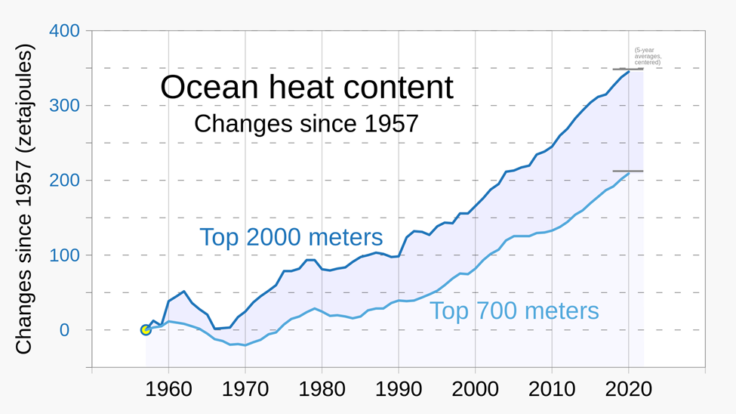
Foremost, increased emissions of greenhouse gases to the atmosphere cause more heat absorption, leading to steady warming of ocean surface waters. Since 1900, global sea surface temperatures (SSTs) have markedly increased by over 1°F (1). While seemingly a small rise, for marine species precisely adapted over millennia, these rapid ocean thermal shifts are driving food supplies to change location and seasonal availability to become less predictable.
Disrupted Migration Patterns and Reproduction
As a result, historically reliable animal migration patterns, reproductive timing cues, and geographic population distributions have become increasingly erratic and mismatched with traditional habitats (1).
Extreme Weather and Habitat Damage
Warmer SSTs also provide more latent heat to energize destructive hurricanes and tropical storms that physically devastate coastal marine ecosystems like fragile coral reef architectures or productive wetland mangrove forests (3). Climate change has already approximately doubled the frequency of extreme Category 4 and 5 storms since satellite monitoring began in 1980, according to measurements of storm duration and maximum wind speeds (6).
Rise in Harmful Algal Blooms
Finally, heightened temperatures combined with agricultural fertilizer runoff are triggering overgrowths of devastating algae, red tides, and other harmful marine microorganisms (5). These toxic algal blooms (HABs) release dangerous compounds and absorb much dissolved oxygen as they spread, suffocating countless fish, marine mammals, and seabirds in events called hypoxic “dead zones” (5).
Ocean Acidification Impacts
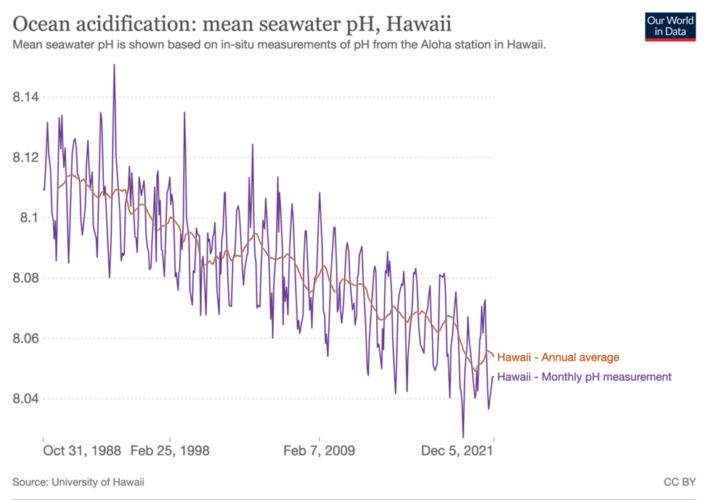
Global warming emissions additionally dissolve into seawater as heightened carbonic acid, causing ocean acidity to sharply rise 26% above preindustrial levels (2). At current atmospheric CO2 trajectories, marine scientists predict over 90% of tropical reef habitats will experience corrosively acidic conditions dissolving coral skeletons by 2050 (2). Since reef structures incubate over 25% of known marine species during early life stages, mass coral die-offs ensure devastating ripple effects through global ocean food webs and ecosystems (7).
Loss of Critical Coastal Habitats
Beyond warming and acidification, climate change supercharges extreme weather systems that critically damage coastal marine habitats. For example, analysis shows extensive mangrove forest areas that shelter juvenile fish and filter coastal contaminants have declined 20% to 50% worldwide over the past 50 years, largely from increased storm destruction and shoreline development pressures (3).
Declining Fish Stocks
These climate impacts decrease sustainable yields for global fisheries as stocks decline with warming waters and loss of nursery habitats. A seminal study in Nature found fish species turnover as temperature shifted habitats caused declines in maximum sustainable yields by 4.1% between 1930 to 2010 (4). Preserving diverse ocean wildlife remains essential for feeding human civilizations.
Recommendations for Boaters and Mariners
Among solutions, individuals must support ambitious clean energy policies that curb emissions driving climate shifts and oceanic chemical changes. Yet directly protecting fragile marine species and habitats from additional anthropogenic threats can also buy precious time while underlying climate issues require ongoing policy battles. For example, programs enlist boater volunteers to report wildlife tangled in discarded fishing nets and gear that slowly causes lethal injuries. Boat strikes likewise critically endanger recovering whale and manatee populations through collisions that cause blunt trauma and devastating propeller wounds (8). By reducing speeds in marine sanctuaries and high traffic areas, mariners help protect precious marine megafauna.
Call for Stewardship and Action
In the global fight to preserve invaluable ocean resources against intensifying human-caused climate impacts, apathy among policymakers and citizens only compounds existential biodiversity threats. But through public education, advocating for urgent climate action with leaders on shore, modifying daily habits harming environments, and providing time or philanthropy to conservation programs, mariners and boaters can play an outsized stewardship role. Our collective actions navigate whether future generations inherit oceans continuing to teem with wondrous life, or tragically diminished through humanity’s complacency amid clear scientific alarms.
Sources:
- IPCC Special Report on the Ocean and Cryosphere in a Changing Climate (Sept. 2019)
- NOAA State of Science Fact Sheet: Ocean and Coastal Acidification (March 2020)
- Duke University Global Mangrove Watch Report (July 2021)
- Nature: Climate change impacts on fisheries (Oct. 2016)
- UN Global Assessment Report on Disaster Risk Reduction (2019)
- Geophysical Fluid Dynamics Lab data on tropical cyclone activity (Nov. 2022)
- Marine Ecosystems and Management Report: Status of Coral Reefs (Oct. 2022)
- U.S. Marine Mammal Commission Vessel Collision Report FY2021
- By Laura Käse and Jana K. Geuer - [1] doi:10.1007/978-3-319-93284-2_5, CC BY-SA 4.0, https://commons.wikimedia.org/w/index.php?curid=110342848
- By RCraig09 - Own work, CC BY-SA 4.0, https://commons.wikimedia.org/w/index.php?curid=129163862
- By University of Hawaii, included in Ritchie, Roser, Mispy, Ortiz-Ospina. "Measuring progress towards the Sustainable Development Goals." SDG-Tracker.org, website (2018). - https://sdg-tracker.org/oceans#targets, CC BY-SA 4.0, https://commons.wikimedia.org/w/index.php?curid=114039656