

Volvo Penta DPS vs. SX Drives
Key Takeaways:
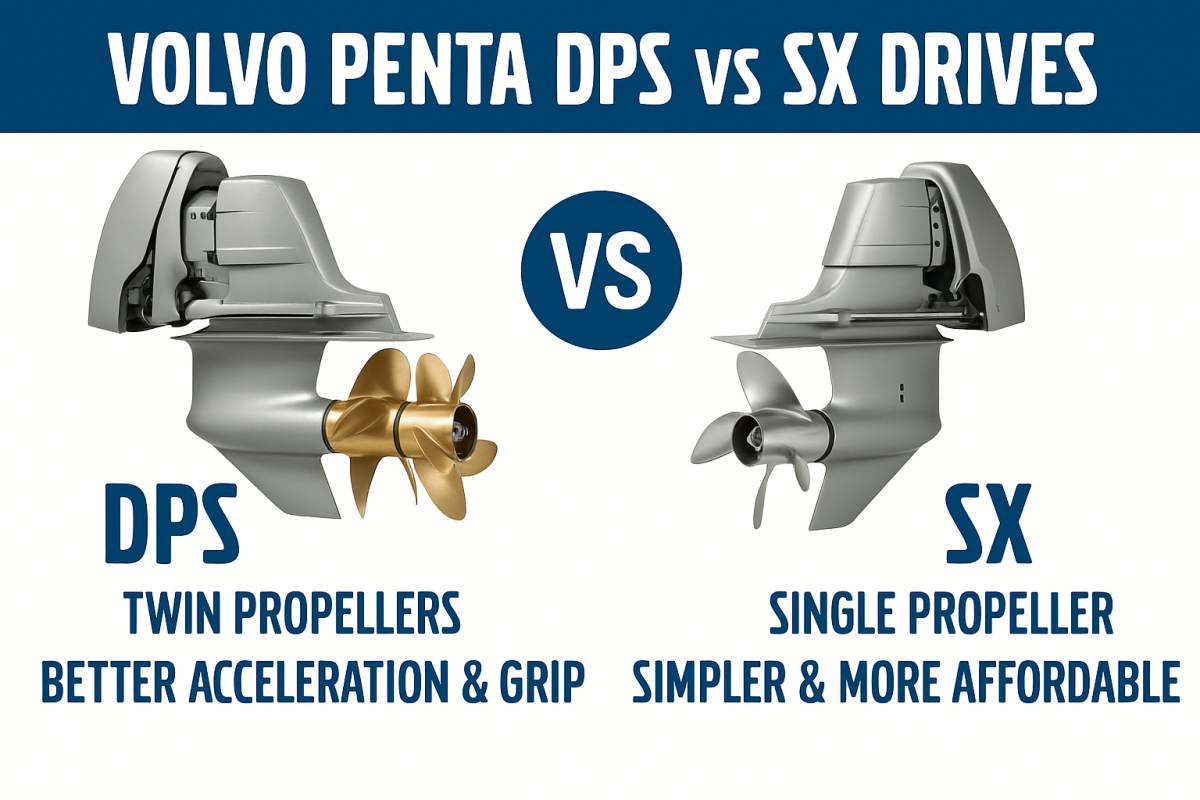
- Volvo Penta’s DPS (Duoprop Drive) offers twin counter-rotating props for superior acceleration, grip, and maneuverability.
- The SX drive features a single propeller, making it simpler, lighter, and more cost-effective.
- DPS is better suited for performance and larger boats, while SX is ideal for smaller vessels and budget-conscious owners.
- Maintenance requirements, propeller options, and driving feel differ significantly between the two.
If you’re choosing a sterndrive propulsion system for your boat, understanding the differences between Volvo Penta’s DPS (Duoprop Single) and SX (Single Propeller) drives is essential. These two drive types are designed for different kinds of boaters, vessels, and performance goals. This guide explains how they compare in key areas such as performance, handling, cost, and maintenance, helping you decide which drive best fits your needs.
What Is the Volvo Penta SX Drive?
The SX is Volvo Penta’s single-prop sterndrive unit. Designed for simplicity and efficiency, the SX drive is ideal for small to mid-sized recreational boats. It uses a single propeller mounted on a straight shaft, powered by a matched gas or diesel engine from the Volvo Penta lineup. The SX drive is popular for runabouts, bowriders, and entry-level cruisers due to its ease of use and lower cost. It’s known for reliable performance with minimal complexity.
What Is the Volvo Penta DPS Drive?
The DPS (Duoprop Single) drive is a higher-performance sterndrive system equipped with two counter-rotating propellers. This configuration increases propulsion efficiency, provides better bite in the water, and reduces cavitation. It also improves straight-line tracking and docking control. DPS drives are typically paired with more powerful engines and are often found on sport boats, cruisers, and performance-oriented vessels where acceleration, stability, and responsiveness matter most.
Performance Comparison
The key difference between SX and DPS drives lies in how they transfer power to the water. The DPS drive’s twin props significantly outperform the single prop of the SX drive in terms of thrust and acceleration. Duoprops also reduce steering torque and offer smoother handling at both low and high speeds. This is especially noticeable in tight turns, choppy water, and when docking.
The SX drive still performs admirably for boats under 25 feet or applications that don’t demand aggressive acceleration. However, its single prop is more susceptible to slippage and torque steer during hard turns or quick take-offs. In contrast, DPS delivers superior grip and control, especially under load or in sporty handling conditions.
Maneuverability & Handling
DPS outperforms SX in precision and maneuvering. Thanks to the counter-rotating props, boats equipped with DPS maintain better directional stability and require less wheel correction at high speeds. Low-speed handling, such as docking or trailering, is also smoother and more intuitive. The DPS system provides excellent bite in reverse, which is a major advantage for docking in tight marinas or against current and wind.
SX drives, while adequate for straightforward cruising, don’t offer the same fine control in reverse or while maneuvering. For casual boating on calm waters, this may not be an issue, but in more demanding situations, the DPS has a clear edge.
Maintenance & Cost Differences
The SX drive is simpler and more affordable to maintain. With only one prop and a straightforward mechanical design, fewer moving parts mean less can go wrong. Parts are easier to find and replacement costs tend to be lower. The SX drive also has fewer specialized maintenance requirements, making it appealing to DIY boaters and owners who want to minimize service shop visits.
The DPS drive, with its two props and more complex internal mechanisms, requires more frequent and often more expensive servicing. Prop replacement, seal maintenance, and gearcase servicing all tend to cost more. However, for many performance-focused boaters, the added power and handling benefits justify the investment.
Propeller Options and Materials
Both drives offer propeller sets in aluminum or stainless steel, but DPS propellers are designed and balanced in matched pairs, which means replacements must be carefully selected and installed. This can add complexity to routine upgrades or damage repairs.
SX props are easier to replace individually and are more forgiving when it comes to pairing and balance. For boaters who frequent shallow or debris-filled waters, the SX may be preferable simply because replacement costs are lower and less specialized.
Which One Should You Choose?
Choose the Volvo Penta DPS if you:
- Prioritize speed, acceleration, and handling
- Own a larger, heavier, or performance-oriented vessel
- Frequently operate in rougher waters or tight docking conditions
- Want greater fuel efficiency under load
- Are okay with slightly higher maintenance costs in exchange for performance
Choose the Volvo Penta SX if you:
- Prefer simplicity and reliability
- Operate a smaller or entry-level recreational boat
- Value lower upfront and maintenance costs
- Mostly cruise in calm waters and don’t need aggressive handling
- Want an easier drive system to maintain or replace on your own
Final Thoughts
Both the Volvo Penta DPS and SX drives have earned strong reputations in the marine industry, but they serve different needs. If you’re focused on performance, precision, and premium boating experiences, the DPS drive is the clear winner. But for casual boaters, weekend cruisers, and those looking for dependable value, the SX drive provides an excellent blend of reliability and ease of use. Carefully evaluating your boating style, vessel size, and long-term budget will help ensure you choose the sterndrive system that best supports your time on the water.